EXPLORING AI IN MUSEUM SPACES
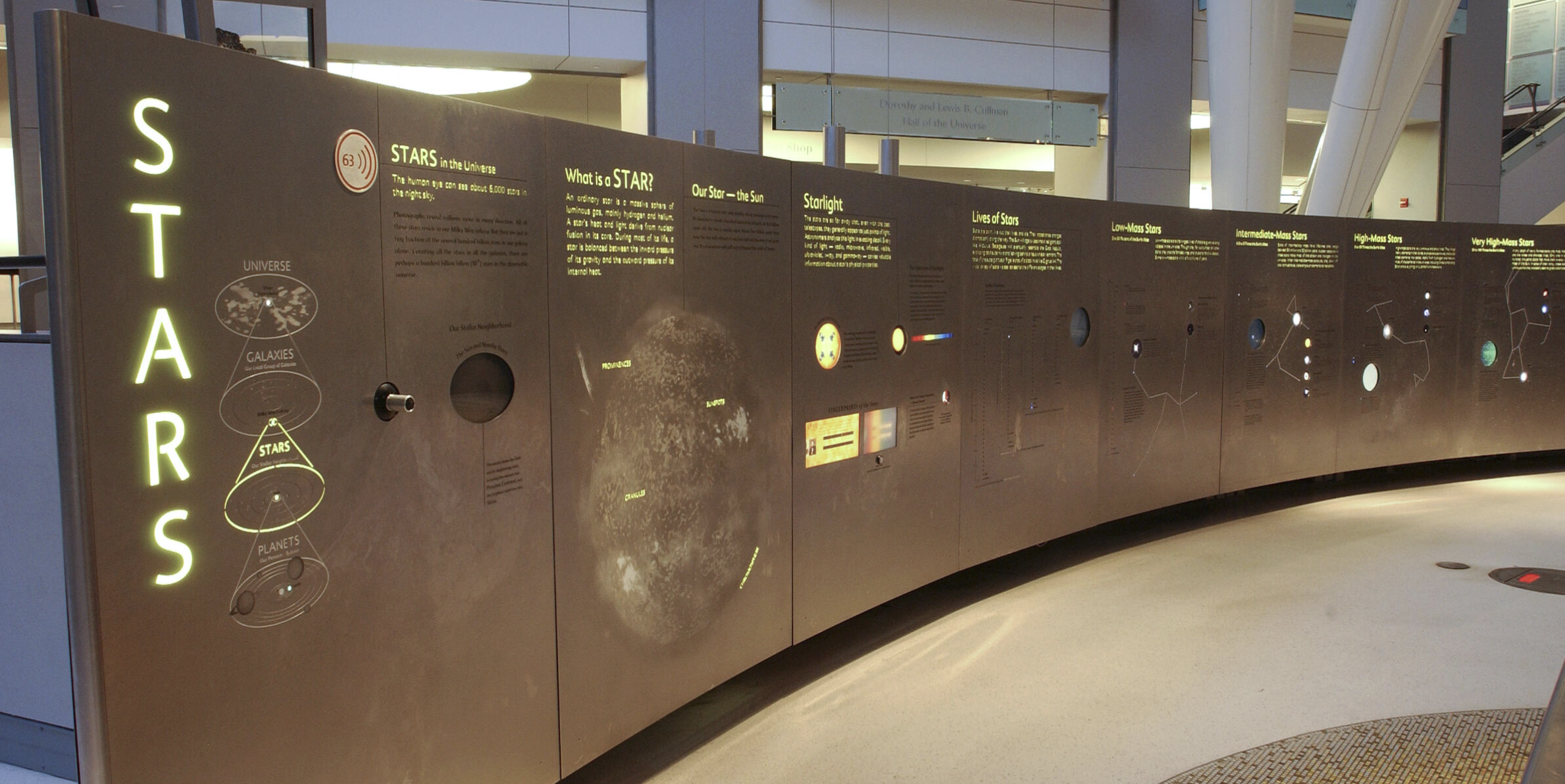
In high school, I interned at The American Museum of Natural History where I gave tours of the halls to school groups. It was one of the coolest jobs ever. I loved walking people through the incredible exhibits that the Museum had to offer. When I began my career in Product Design, I knew I wanted to create experiences that connected people to the scientific world I loved.
I was particularly interested in the idea of creating an engaging experience for adults who were casually interested in learning more about scientific fields. I noticed that there were plenty of museum-run sites for children to explore, but not as much for adults. As this idea developed, I also thought this might be a good opportunity to evaluate how AI could be integrated into this type of experience.
As I began to work on the project, my primary goal was straightforward: determine if AI assistance is genuinely needed, and more importantly, whether it would enhance or detract from the museum experience itself. I started this process by conducting user interviews with people who regularly visit museums.
user research findings:
“If it’s not immediately available I would let the question go unanswered, and seek an answer when I’m home.”
What was most revealing was all participants’ resistance to AI assistance during the physical museum visit itself. When asked directly about using AI in museum settings, one participant was clear: he didn’t see himself using it in art museums, though it “could be helpful” in science contexts. Another participant had never used AI assistants and showed hesitancy about voice interaction in public spaces. Both emphasized a desire for independent exploration. As one put it, they’ve “never been one for audio tours” and wanted “to go off on their own,” and both expressed an unwillingness to spend prescribed amounts of time at each exhibit section.
However, the interviews also revealed an unmet need that suggested where AI could meaningfully contribute. Participants described questions that arise during visits but remain unanswered. These were deeper questions, related to the exhibits but not directly addressed within them, that museum staff typically couldn’t answer. “If it’s not [immediately available] I would let question go unanswered, seek an answer when home,” one participant explained. She wanted information that would help her “understand more” and appreciated the idea of having someone “help select the most important info to consume” while still maintaining agency, allowing her to ask questions rather than just receiving information.
BRAINSTORMING & Issues with ai design work:
This research helped solidify my design direction: rather than inserting AI into the museum space while people are physically in an exhibit, I should focus on creating a post-visit experience that respects the sanctity of the in-person encounter while supporting the natural curiosity it generates.
Based on my research, I’ve started drafting prototypes for what this “Deep Dive Companion” could look like. I took this early design stage as an opportunity to try out some AI prototyping tools, just to get a sense of what could work visually. Honestly, when it came to brainstorming, Loveable and Claude were great. I was able to map out key user flows and get a basic prototype up and working. However, when it came to the actual design aspect of the product, I found these tools fell short.
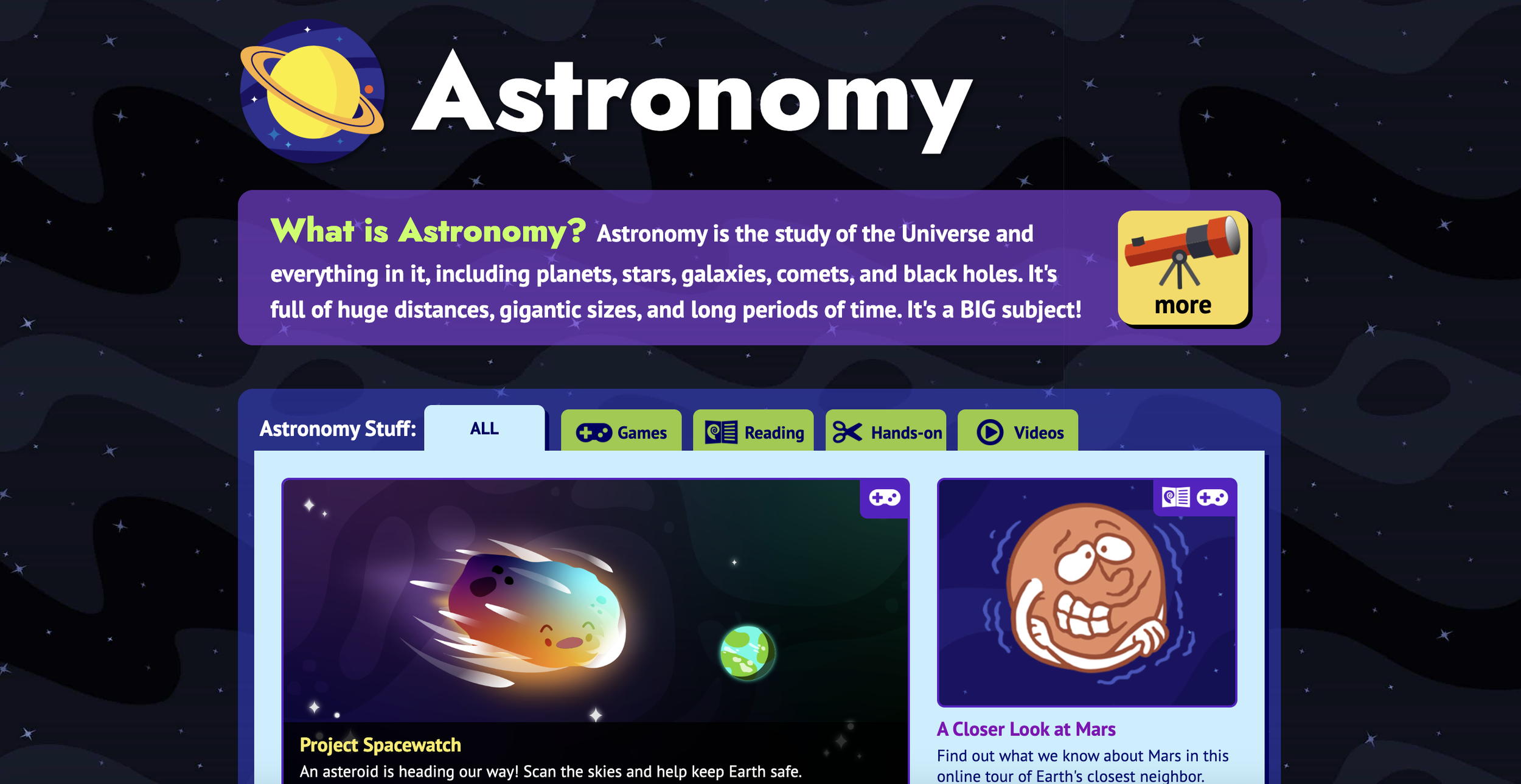
AMNH’s Ology Site for Kids
I prompted Claude and Loveable AI to come up with a design that had more sophisticated/modern visuals, as this was geared towards adults and therefore couldn’t utilize the existing color palettes and design elements that are often present in children’s science experiences. I did most of the brainstorming in Claude, and initially planned to take the idea over to Lovable AI to create the prototypes. However, I ended up asking Claude to produce the first prototype, and found that it was a fairly good starting point. I then took this design and gave it to Lovable, with the hopes that it would be stronger at enhancing the visual aspects (I wanted a distinctly modern look/UI elements), but Loveable’s version looked and performed basically the same as Claude’s–there was no clear difference.
Additionally, I felt that there was something missing from both versions: a lack of integrity in the design. This lack is in part something I felt personally, as I have trouble justifying designs that aren’t made entirely by a human. I think the lack of integrity also stems from the absence of a genuine design “process.” Creating a more basic wireframe, testing that for structure, then iterating on that before eventually determining colors and graphics. Using AI to bypass these steps (steps which I find integral to my design process) almost felt like I was cheating. Additionally, by asking it to remove anything “childlike” from the design, it became somewhat sterile.
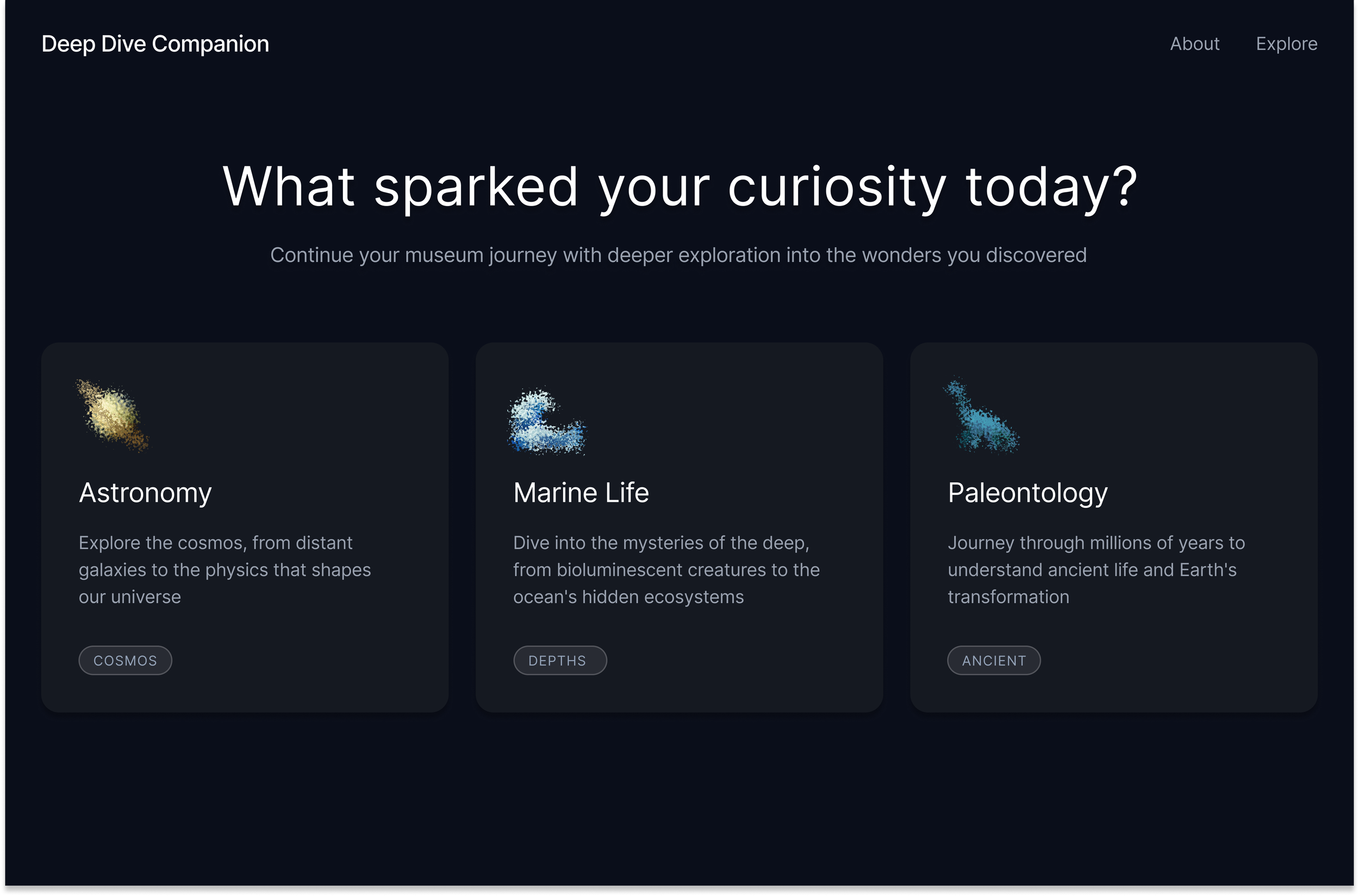
Prototype created with Loveable AI & Claude
There’s nothing inherently bad about the above design–it’s fine. But there’s nothing that interesting about it either. It doesn’t capture the imagination, or inspire a passion for the sciences as I’d hoped. I realized that the design required more nuance, and it would be difficult to achieve this using AI. I went back and forth tweaking the color scheme, asking for different visuals, and more distinct backgrounds, but failed to land on something that came across as genuinely engaging. I think in part what was missing was any reflection of my personal passion for the sciences, which is ideally what I would want to come across in these designs. However, I knew I couldn’t expect AI to reflect this. Claude and Loveable were simply adhering to my instructions to make this experience feel mature, and in doing so they failed to foster the equally important sense of wonder that the product needed. Additionally, I had issues getting Claude to select color schemes that genuinely stood out from one another. The Astronomy and Paleontology color palettes were virtually the same, despite multiple prompts requesting a change.
That said, I never intended to rely on AI to create my designs in full. As a Product Designer, that just seemed like a waste of my skillset. But I’m glad I tested out these tools, as it gave me a sense of their strengths and limitations. I also recognize that AI is a useful tool for designers, as not all projects provide the time to iterate all the way from low to high fidelity wireframes. These tools are perfect for situations where you just need to get an idea out to test/show how it could work. But as this is a personal project, I’m lucky to have the time to go through a more complete design process, and so I’m currently building my own designs and using the work created thus far as a starting point. Looking forward to sharing more updates once I’ve finished!